What Exercise Physiology Is
Exercise physiology is the scientific study of how the body responds to physical activity in the short term and how it adapts over time with regular training. It draws on anatomy, biochemistry, and physiology to explain what happens to the cardiovascular system, skeletal muscle, hormonal environment, respiratory function, and metabolic pathways during and after exercise. Research published through NCBI StatPearls describes exercise physiology as the study of how all physiological systems undergo specific adaptations when the body engages in regular physical activity, each adapting to increase movement efficiency and exercise capacity. These adaptations are specific to the type and intensity of training, meaning that endurance training produces different physiological outcomes than resistance training, and both produce different outcomes than high-intensity interval work. Understanding these distinctions is what separates a practitioner who simply follows popular training trends from one who can design a programme grounded in how the body actually works.How the Body Responds to Exercise: The Core Physiology
Cardiovascular Adaptations
One of the most well-documented areas of exercise physiology is how the cardiovascular system adapts to regular aerobic training. Research in Circulation Research confirms that aerobic training leads to an increase in maximal cardiac output, driven by enlargement of the heart’s chambers, improved contractility, and greater blood volume. The practical result is a higher VO2max, lower resting heart rate, and significantly improved endurance performance. These adaptations do not happen overnight. Studies have shown that around 90 days of consistent, structured training is typically needed before meaningful cardiac remodelling becomes measurable. This timeline is directly relevant to programme design, and it is one of the reasons periodised training, structured around long-term physiological adaptation, produces better outcomes than random training volume.Muscular Adaptations
Skeletal muscle adapts differently depending on the training stimulus. Aerobic training increases the cross-sectional area of slow-twitch muscle fibres and enhances mitochondrial density, improving the muscle’s capacity to sustain effort over time. Resistance training primarily drives hypertrophy of fast-twitch fibres, increasing force production capacity. Research from NCBI notes that high-intensity interval training elicits distinct metabolic responses that influence both muscle hypertrophy and metabolic flexibility, making it a particularly versatile training modality for practitioners working with diverse clients.Hormonal and Metabolic Responses
Exercise triggers a cascade of hormonal responses. Cortisol, adrenaline, and growth hormone all respond to exercise intensity. Insulin sensitivity improves with consistent training, which has significant implications for clients managing metabolic conditions. The body’s ability to regulate blood pressure also improves with regular aerobic activity, with evidence showing measurable reductions in blood pressure following bouts of exercise as short as three minutes at moderate intensity. For fitness professionals and coaches, understanding these hormonal and metabolic responses is what enables them to tailor training to individual client health profiles, rather than applying generic programmes that may be inappropriate or even counterproductive for certain populations.Exercise Physiology in the South African Context
South Africa has a significant public health burden associated with physical inactivity. Non-communicable diseases including cardiovascular disease, hypertension, type 2 diabetes, and obesity are among the leading health challenges facing the population. Exercise physiology sits at the centre of evidence-based interventions for all of these conditions. As research from the University of Johannesburg’s sport and exercise science programmes notes, sport and exercise science graduates are positioned to fill a genuine gap in South Africa’s fitness industry and health promotion needs, particularly given the prevalence of non-communicable diseases in the population. This is not a niche academic observation. It reflects the practical reality of a country where qualified exercise professionals with a solid physiological foundation are consistently needed. At the high-performance end of the spectrum, South African sport continues to invest in sport science support across rugby, cricket, athletics, football, and other disciplines. Exercise physiologists who understand how to test, monitor, and enhance athlete performance through structured training programmes are a growing part of that support infrastructure.What Careers Exercise Physiology Leads To
Exercise physiology knowledge underpins several career paths rather than leading exclusively to one role with a single title. The specific career you build depends on the level and focus of your qualification, the setting you work in, and the client population you choose to serve.Fitness and Personal Training
At the most accessible entry point, exercise physiology principles inform every quality personal training interaction. Understanding VO2max, heart rate zones, training load, and recovery physiology gives a fitness professional the tools to design programmes that are not just challenging but scientifically sound. eta College’s fitness qualifications are built around this applied physiological foundation, preparing graduates to work with apparently healthy clients in gym, studio, and community settings.Sport Conditioning and Performance
Sport conditioning coaches use exercise physiology to design and periodise training programmes for athletes across a wide range of sporting codes. Understanding how the body adapts to different training stimuli, how to manage training load to reduce injury risk, and how to peak an athlete’s performance for competition are all applied exercise physiology skills. The Diploma in Sport and Exercise at eta College and the Bachelor of Exercise in Sport and Leisure both cover these applied physiological competencies directly.Corporate Wellness and Occupational Health
Large employers across South Africa increasingly invest in employee wellness programmes. Exercise physiologists who can assess physical capacity, design workplace activity interventions, and communicate the health benefits of structured exercise in accessible terms are well positioned for these roles. This is a growing sector that does not always appear in traditional sport job listings but draws directly on the same physiological knowledge base.Exercise Rehabilitation Support
While full clinical exercise rehabilitation falls within the scope of biokineticists and physiotherapists, exercise physiology knowledge supports practitioners working in adjacent roles such as post-rehabilitation conditioning, chronic disease wellness management, and community health promotion. Understanding where the clinical boundaries lie, and how to work effectively within them, is something eta College’s accredited programmes address specifically.How eta College Builds Exercise Physiology Into Its Qualifications
eta College was founded on the principle that sport and exercise education should combine rigorous theoretical knowledge with hands-on practical application. Exercise physiology is not taught as a standalone subject disconnected from real-world practice. It is woven through the anatomy, training science, fitness testing, programme design, and applied sport science components of every major qualification the college offers. Students completing the Diploma in Sport and Exercise or the Bachelor of Exercise in Sport and Leisure graduate with the physiological understanding to design evidence-based training programmes, interpret fitness test results, and make informed decisions about exercise intensity, volume, and progression for the clients and athletes they work with. These qualifications are registered on the National Qualifications Framework by the South African Qualifications Authority and accredited by the Council for Higher Education. Graduates can register with REPSSA, which through its ICREPS affiliation gives South African exercise professionals international portability of their credentials. Study options include full-time and part-time campus study across eta College’s nine campuses throughout South Africa, as well as fully supported online distance learning for those who need flexibility around existing work or life commitments.The Science That Drives Everything Else
Exercise physiology is not a specialisation for people who want to work in a laboratory. It is the scientific foundation that makes every other element of sport and fitness practice more effective, from programme design and athlete monitoring to client health screening and long-term training planning. Whether you want to work with elite athletes, general fitness clients, school sport programmes, or corporate wellness initiatives, understanding how the body responds and adapts to exercise is what separates practitioners who guess from those who know. If you want to build a career grounded in that science, find out more about eta College’s sport and exercise programmes and take the first step toward a qualification built on the physiology that drives performance.What is exercise physiology?
Exercise physiology is the scientific study of how the body responds to physical activity in the moment and how it adapts over time with regular training. It draws on biology, chemistry, and anatomy to explain what happens inside the body during and after exercise, from the cellular level up to whole-body systemic responses.
The field covers cardiovascular responses such as changes in heart rate, stroke volume, and blood flow during exercise. It covers muscular physiology, including how muscles generate force, how they fatigue, and how they recover and grow stronger through training. It also covers hormonal responses, metabolic processes, respiratory adaptations, and the structural and functional changes that build up over weeks, months, and years of consistent training.
For fitness and sport professionals, this is not background reading. It is the explanatory framework behind every programme design decision. Knowing why progressive overload works, why recovery carries as much weight as training, why different energy systems dominate different activities, and how individual variation shapes training response makes a professional far more effective than one working off templates. It separates prescribing a programme from understanding why that programme produces the results it does.
In South Africa, exercise physiology knowledge is embedded in the sport and fitness qualifications offered by institutions like eta College, where it forms the scientific core of both the Diploma in Sport and Exercise and the Bachelor of Exercise in Sport and Leisure.
The full guide, Exercise Physiology in South Africa: What It Is and Where It Leads, works through the major physiological systems one at a time and shows how each one shows up in day to day programme design. Start there if you want the whole picture rather than a single answer
What does an exercise physiologist do in South Africa?
Exercise physiologists apply their understanding of how the body responds to activity to design, prescribe, and monitor training programmes for a range of populations. The day to day work depends heavily on the setting and on the scope of practice that comes with the practitioner's qualification.
In fitness facilities and commercial gyms, exercise physiologists and sport science graduates apply physiological principles to programme design, fitness testing, and client progress monitoring. They work past standard personal training by bringing a deeper understanding of cardiovascular adaptation, musculoskeletal physiology, and energy system demands into how a programme is built.
In sport performance settings, they support coaches and athletes with physical testing, training load management, conditioning programme design, and performance analysis. South African high-performance structures, from provincial academies through to national federations, employ practitioners with exercise science credentials to support athlete development.
Rehabilitation support and corporate wellness are two areas that keep growing. In rehabilitation roles, exercise physiologists work alongside clinical professionals to deliver exercise-based interventions for clients managing chronic conditions or recovering from injury, within the scope their qualification allows. In corporate wellness, they design and run programmes for organisations treating employee health as part of their HR and productivity strategy.
One point to be clear about. In South Africa, the title of exercise physiologist is not formally regulated the way biokineticist and physiotherapist are. Your scope of practice comes down to what your specific qualification permits, which makes the recognition behind that qualification matter a great deal.
Our guide to exercise physiology in South Africa expands on each of these settings, including who employs exercise science graduates and what the entry-level roles usually look like in practice.
What is the difference between exercise physiology and biokinetics in South Africa?
This is one of the most searched questions in the South African exercise science space, and it deserves a precise answer, because mixing the two terms up leads people into the wrong qualification for the career they actually want.
Exercise physiology is a scientific discipline rather than a regulated profession with a fixed scope of practice. It is the body of knowledge that sits underneath how exercise professionals understand and apply training principles. Practitioners holding sport science or exercise physiology qualifications work in fitness, sport, conditioning, and health promotion. Their scope is set by their qualification level and the professional bodies they register with, such as REPSSA or SASCA, not by a single clinical registration authority.
Biokinetics is a regulated clinical health profession governed by the HPCSA. It carries a specific, protected scope of practice covering the final phase of rehabilitation and chronic disease management through exercise. To practise as a biokineticist you need the designated academic credentials and HPCSA registration. Working outside those boundaries is a legal problem, not only a professional one.
The two overlap in knowledge because biokinetics is built on exercise physiology. A biokineticist has to understand exercise physiology thoroughly. The reverse does not hold in professional terms. Understanding exercise physiology does not hand a practitioner the scope of practice that HPCSA registration confers.
If you are choosing between study paths, the useful question is whether you want to work in clinical rehabilitation and healthcare under HPCSA registration, or in fitness, sport, and performance under bodies like REPSSA and SASCA. That answer points to the right qualification far more reliably than comparing the two fields in the abstract.
Both sides of this comparison have their own full guides. Read Exercise Physiology in South Africa: What It Is and Where It Leads for the exercise science route, and the biokinetics career guide for the HPCSA route, then compare them against the setting you want to work in.
What careers can exercise physiology lead to in South Africa?
Exercise physiology knowledge sits underneath a wide range of careers across South Africa's sport, fitness, and health sectors. Which roles open up depends on the level and focus of the qualification, but the field feeds into more employment pathways than most prospective students expect when they start researching it.
Personal training and fitness instruction are the most direct entry points. Graduates with a real physiology foundation are better equipped than those holding basic fitness certifications to work across different client populations, build evidence-based programmes, and explain the reasoning behind their decisions in a way that earns client trust and keeps retention high.
Sport conditioning coaching is the other major pathway. Schools, clubs, provincial academies, and high-performance environments across the country employ conditioning coaches who understand physiology well enough to design and manage physical preparation for competitive athletes. As South African sport has professionalised, demand in this space has grown with it.
Corporate wellness is expanding too. South African organisations keep increasing their investment in employee health programmes, and exercise science graduates are well placed to design and deliver those interventions. Community health promotion, exercise rehabilitation support, fitness centre management, and applied sport science roles inside national federation structures fill out the rest of the map.
That breadth is part of why an applied sport and exercise qualification from a provider like eta College is a practical investment. The knowledge carries across roles, which gives graduates room to move between settings as their experience and interests shift.
Our exercise physiology guide covers each of these career paths in more depth, with the qualification level and entry requirements attached to each one so you can see what a realistic first job looks like.
What is VO2max and why does it matter?
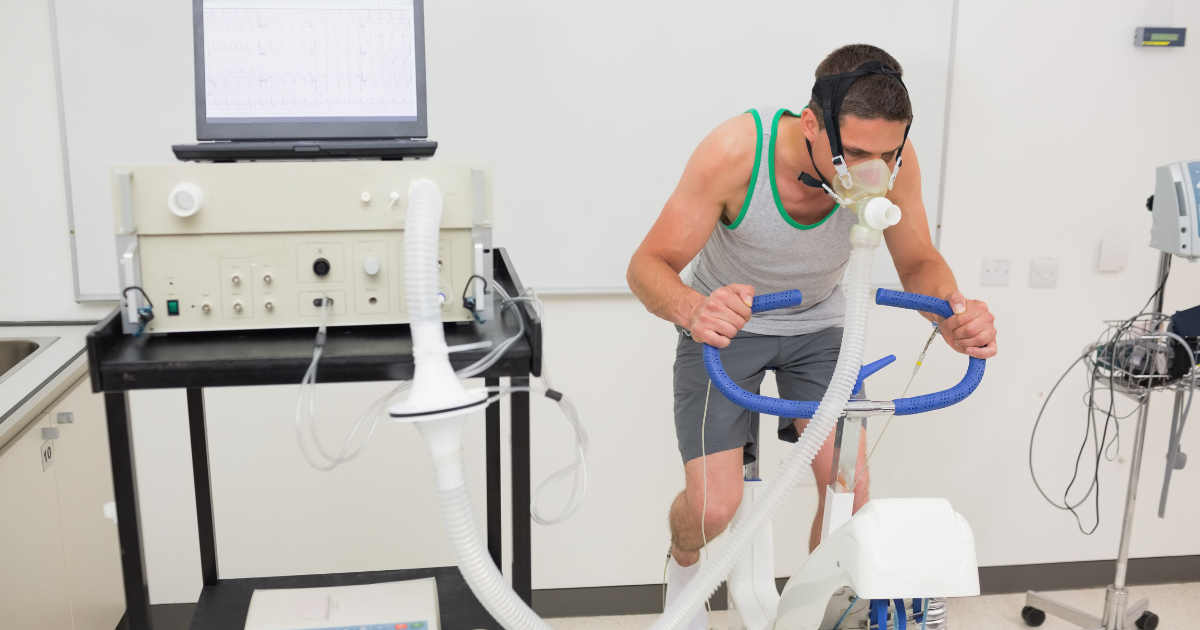
VO2max is the maximum rate at which the body can consume oxygen during intense exercise. It is expressed in millilitres of oxygen per kilogram of body weight per minute, and it is one of the most widely used and best validated indicators of cardiovascular fitness and aerobic capacity in exercise science.
It matters because it reflects several physiological systems working together at once: the lungs pulling oxygen from the air, the heart moving oxygenated blood around the body, and the muscles extracting and using that oxygen to produce energy. A high VO2max means all of those systems are holding up well under the demands of hard exercise.
For exercise physiologists and sport scientists, VO2max is a useful assessment tool because it allows aerobic fitness to be tracked precisely over time. A rise in VO2max after a training block is objective evidence that the cardiovascular adaptations being targeted are actually happening. It is also used to predict endurance performance and to set training intensity zones against an individual's physiological capacity rather than a generic prescription.
Fitness professionals can use the concept without access to lab testing. Submaximal field tests such as the beep test, the Cooper run, and cycle ergometer step tests all produce estimated VO2max values that work for tracking progress and informing programme design. The concept also gives you a way to explain to clients why aerobic base work at lower intensities pays off over time, which is a common sticking point for people who assume every session has to be maximum effort to count.
The testing section of our exercise physiology guide covers VO2max alongside the other field and lab assessments South African fitness professionals use most, including how to choose the right test for the client in front of you.
Does eta College offer exercise physiology qualifications?
eta College does not offer a qualification carrying the exercise physiology title, but the sport and exercise science programmes here are built around applied exercise physiology as their scientific core. The Diploma in Sport and Exercise and the Bachelor of Exercise in Sport and Leisure both cover physiological foundations, fitness testing methodology, programme design, and human movement science in depth.
The distinction worth grasping is between the academic label and the content behind it. Exercise physiology is a body of knowledge rather than a single qualification. It runs through the sport and exercise curricula at eta College in the same way it underpins the work of biokineticists, conditioning coaches, and fitness professionals across the industry.
Graduates leave with a working understanding of how the body responds to and adapts from exercise, plus the applied skills to put that understanding to work in real fitness, sport, and performance settings. That is exercise physiology in practice, even though the qualification title reflects the wider sport and exercise science field.
If your goal is to work as a fitness professional, sport conditioning coach, or exercise science practitioner in South Africa, an eta College sport and exercise qualification gets you there. If your goal is clinical exercise prescription under HPCSA registration, the biokinetics university pathway is the route. They are different destinations, and the right choice depends on which one you are heading for.
If you arrived here from our exercise physiology guide, the qualifications section compares the Diploma and the Bachelor side by side, including entry requirements, duration, and the roles each one typically leads into.
Can I study exercise science online in South Africa?
Yes. eta College offers fully supported online distance learning for its sport and exercise qualifications, so you can work toward a recognised exercise science credential from anywhere in South Africa without attending campus full time.
The online model suits people already working in sport, fitness, or a related field who want to formalise their knowledge and credentials while staying in the industry. It takes away the geography and scheduling barriers that make campus study impractical for most working adults, and it lets students move at a pace that fits around what they already have on.
Online students receive academic and practical support through the college's distance learning platform, including study materials, assessor feedback, and guidance through the practical components. Those practical elements are structured to be completed in a relevant supervised environment such as a gym, sport club, or fitness facility, which working fitness professionals are usually embedded in already.
An eta College online qualification carries the same weight as the campus equivalent. The programmes are registered on the National Qualifications Framework, and the delivery method does not change how professional bodies such as REPSSA and SASCA recognise the credential. When you compare online exercise science options in South Africa, NQF registration and professional body alignment are the two markers that tell you what a qualification is really worth.
The study options section of our exercise physiology guide covers online and campus delivery together, along with what to check before enrolling with any South African provider offering exercise science by distance.
How does exercise affect the cardiovascular system?
Regular aerobic exercise produces some of the best documented physiological adaptations in the human body, and the cardiovascular system is where many of the most important ones show up.
During a single session, the cardiovascular system responds by raising heart rate, increasing stroke volume (the amount of blood pumped per beat), redirecting blood flow toward working muscles, and lifting cardiac output to meet the oxygen demand of the activity. These are acute responses that settle back to baseline within hours of finishing.
With consistent training over weeks and months, structural and functional adaptations develop. The heart's chambers, the left ventricle in particular, enlarge and strengthen, so the heart moves more blood per beat. Blood volume increases, supporting better oxygen delivery. Capillary density in working muscle improves, making oxygen extraction more efficient. Resting heart rate drops as the heart gets more efficient. Blood pressure regulation improves and cardiovascular disease risk falls.
Together those adaptations show up as a measurable rise in VO2max, better endurance capacity, and a cardiovascular system that performs more effectively both during exercise and at rest. These are among the most clinically meaningful benefits of regular physical activity, which is why exercise physiologists, biokineticists, and fitness professionals across every discipline treat cardiovascular conditioning as the foundation of a well-built health or performance programme.
Understanding these adaptations at a physiological level is what separates evidence-based professionals from those working on intuition or whatever is trending. It lets trainers and coaches explain the reasoning behind a prescription, set expectations a client can actually hold onto, and build programmes that deliver the cardiovascular outcomes the client came for.
This is one of several system-by-system breakdowns in our exercise physiology guide, which covers muscular, metabolic, and respiratory adaptation alongside the cardiovascular picture.