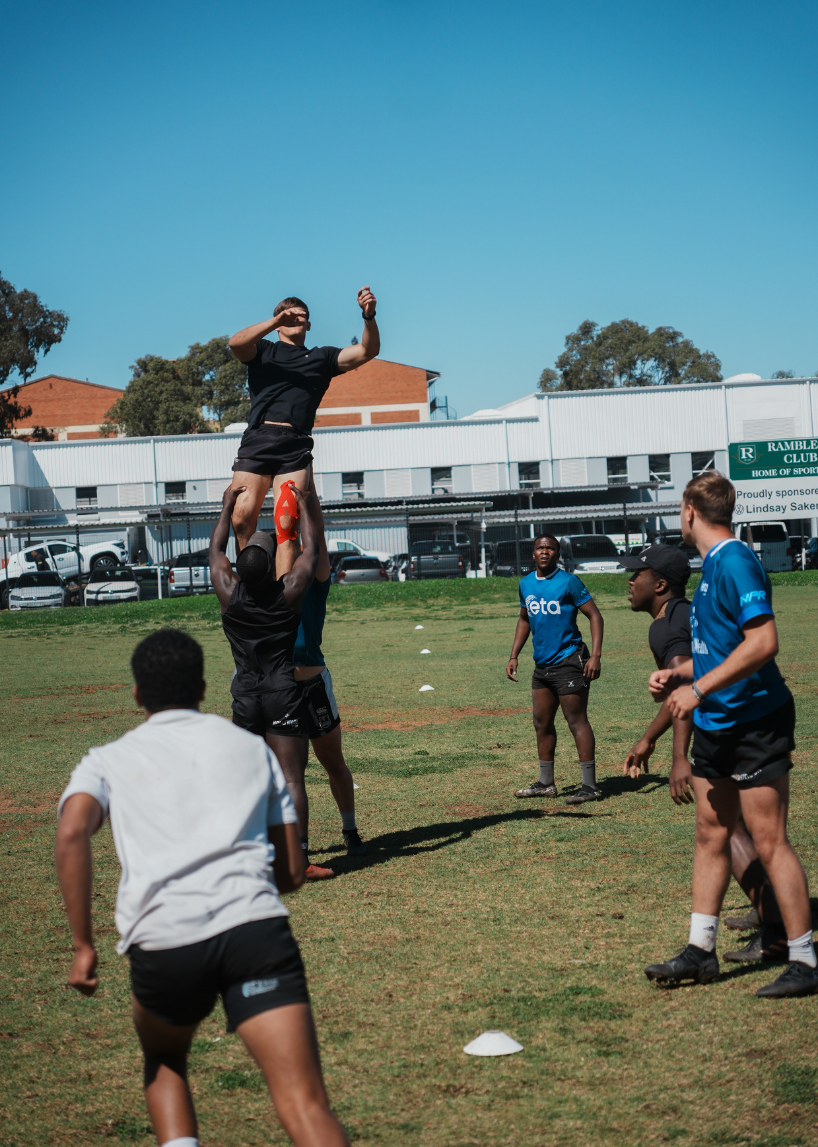
The Postgraduate Diploma in Sport Performance is an advanced, industry-focused qualification designed for professionals seeking to operate at the forefront of high-performance sport. This one-year postgraduate programme integrates applied sport science with real-world performance practice, equipping graduates to optimise athletic performance across elite, developmental, and professional sporting environments.
Grounded in evidence-based methodologies and contemporary performance systems, the programme develops the knowledge and practical competence required to assess, monitor, and enhance individual and team performance. Graduates emerge with the confidence to apply performance technologies, manage training load, support injury prevention and recovery, and contribute meaningfully within multidisciplinary high-performance teams.
This qualification is ideal for coaches, sport scientists, performance analysts, and practitioners who want to elevate their impact through advanced, applied sport performance expertise.
1-2 Years
Campus/Hybrid Programme
120 credits
9 Feb 2027
16 Feb 2027
Same great education, four ways to pay. Every plan starts with a once-off R1 500 registration fee that secures your child's place.
This NQF level 8 Learning course is accredited by the Council on Higher Education (CHE). The qualification it achieves is registered on the Higher Education Qualifications Sub Framework
The course is aimed at the academically & physically inclined person with a key interest in exercise, wellness and sport. Major emphasis is placed on the practical application needed to inform professional practice in sport, leisure and fitness environments.
The programme guides learners through the foundational knowledge required to work in the fitness industry at a professional level. The course equips students to successfully attain; sound scientific knowledge base in the field of exercise science and wellness as well as practical skills and appropriate attitudes and values to enhance health, optimise wellbeing and performance of individuals and communities. In addition to the exercise science element, a psycho-social and management subject streams have been added to further enhance their employability at the end of the degree.
The programme is designed to enable the potential within each student to achieve his or her optimal potential and engage actively and progressively within the fitness industry.
After completing this course, you will be confident to:
This module explores the scientific theories and principles that underpin effective sport performance and training. Drawing on sport science, neuroscience, and psychomotor theory, you learn how training interventions are designed, structured, and evaluated in both individual and team sport contexts. The focus is on understanding why training methods work and how to systematise interventions to improve performance outcomes.
This module examines the psychological, neurological and behavioural factors that influence human performance under pressure. You will explore contemporary sport psychology, mental toughness, neuroscience, performance analytics, leadership and high-performance culture. Particular emphasis is placed on the application of mental toughness as a force multiplier for enhancing athlete, team and organisational performance. You will develop the ability to analyse performance challenges, interpret behavioural indicators, utilise emerging technologies and design evidence-based interventions to improve sporting outcomes.
This module develops your ability to collect, analyse, interpret, and report sport performance data accurately and meaningfully. You learn how to select appropriate performance metrics, identify trends and patterns, and apply statistical modelling to support valid, reliable decision-making. Emphasis is placed on transforming data into actionable insights that inform performance feedback and planning.
This module focuses on contemporary athlete monitoring and performance tracking technologies. You explore how physiology, behavioural psychology, and technology interact within sport performance systems, and learn to evaluate and apply monitoring tools such as real-time feedback systems, time-motion analysis, and impact data. The emphasis is on selecting and using technology appropriately to support assessment, training, and performance improvement.
In this module, you develop a deep understanding of training load management and its impact on performance, injury risk, and athlete wellbeing. You examine how physical, mental, emotional, and psychosocial factors influence load tolerance, and learn how to apply training load principles across different sports and athlete profiles. The module emphasises informed decision-making to balance performance enhancement with risk management.
This module equips you with the skills to conduct comprehensive needs analyses for specific sports. You learn how to identify key performance indicators, recognise injury risk profiles, and apply profiling and benchmarking techniques to guide performance planning. Ethical and cultural considerations in communicating performance findings are also addressed, ensuring responsible and professional practice.
In this applied module, you learn how to select and justify performance interventions based on sound data and critical reasoning. You will evaluate intervention options, assess their potential impact, and choose strategies that offer the greatest benefit to athletes or teams. Decision-making is grounded in observable evidence and aligned to defined performance criteria.
The Capstone Research Project represents the culmination of the programme. You integrate your learning by addressing a real-world sport performance problem through applied research or a case study. This module develops the ability to conduct independent inquiry, apply theory to practice, analyse data, and present evidence-based solutions through a written report and oral presentation.
This module provides structured, supervised exposure to real-world environments for sport performance. You will apply sport science and conditioning principles in practice, develop professional and ethical behaviours, and collaborate within multidisciplinary performance teams. Reflective practice is embedded throughout, supporting the formation of professional identity and career readiness.
This introductory elective introduces the fundamentals of performance analysis, including coding and time-motion analysis. You learn how to identify key performance indicators (KPIs), translate performance data into meaningful action points, and use industry-relevant software tools to analyse sporting performance. This module provides a strong entry point into applied performance analysis practice.
The minimum admission requirement is an appropriate/cognate bachelor’s degree or an appropriate Advanced Diploma with a minimum average of 60%